Media Monitoring
and Analysis
Track, Analyze and Share Your Earned Media Coverage With Critical Mention's
All-In-One Solution.
Best-in-Class Media Monitoring Software
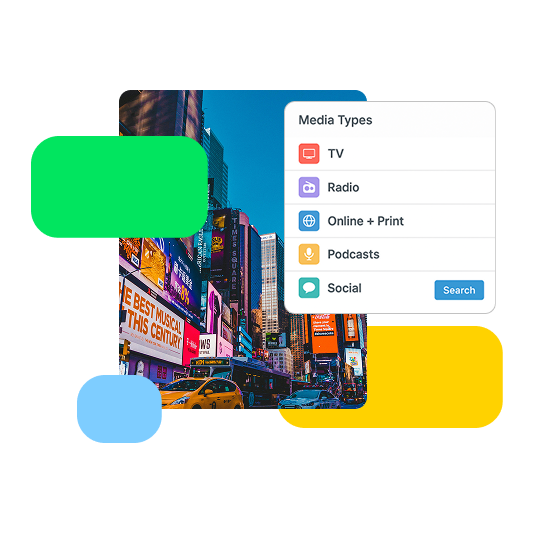
Leverage real-time monitoring across millions of online news sources, licensed print, podcasts and social media platforms like Twitter, Instagram, Facebook and YouTube.
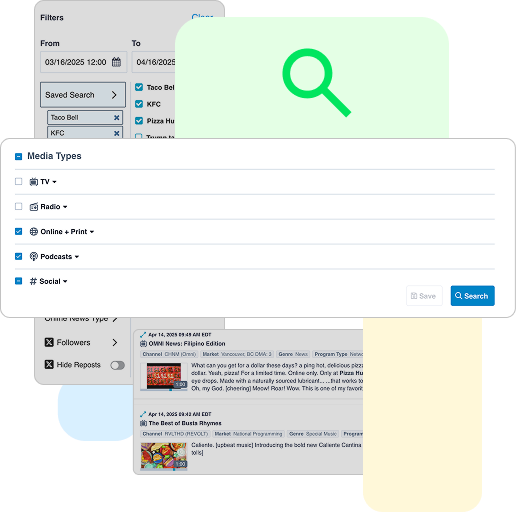
Search by Keywords Across Media Types and Specific Markets
-
Get real-time search results for media hits with easy-to-use search functionality
-
Use saved or ad-hoc searches to track specific keywords in the media markets that matter most to you
-
Trust the uptime reliability of a robust, cloud-based platform
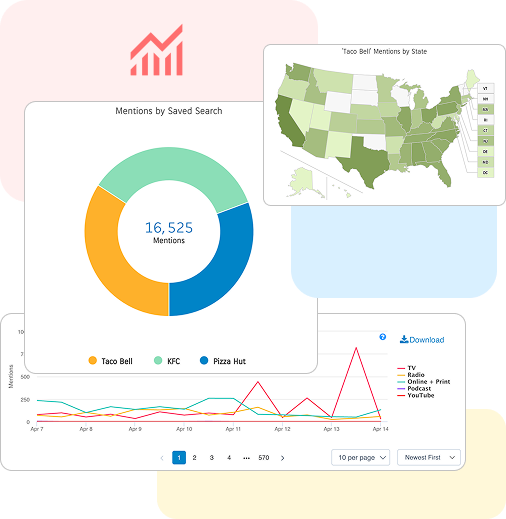
Create and Share Customizable Dashboards and Reports
-
Easily generate reports and track metrics like publicity value, geographic breakdown and audience value
-
Measure your brand against competitors with share-of-voice metrics
-
Visualize coverage on density maps and word clouds. Create reports with custom templates, graphs and charts
-
Create year-over-year reports and conduct enhanced competitive research with extensive archive search capability
-
Utilize our Google Analytics integration to view website metrics alongside earned media mentions in reports
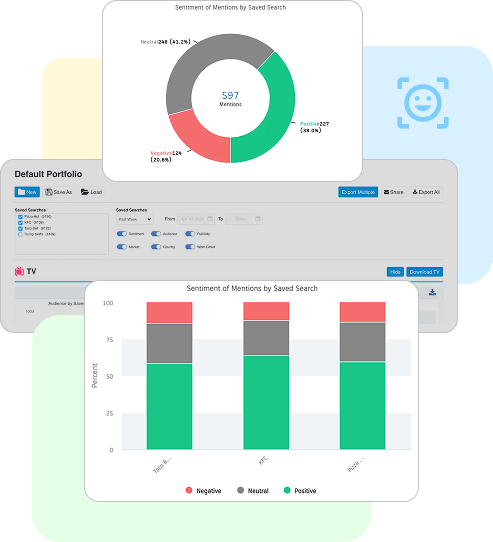
Measure Brand Strength with Sentiment Analysis
-
Understand the context of your earned media coverage with sentiment analysis
-
Track and amplify positive coverage to grow your brand
-
Stay on top of potential PR crises by spotting potential problems before they grow
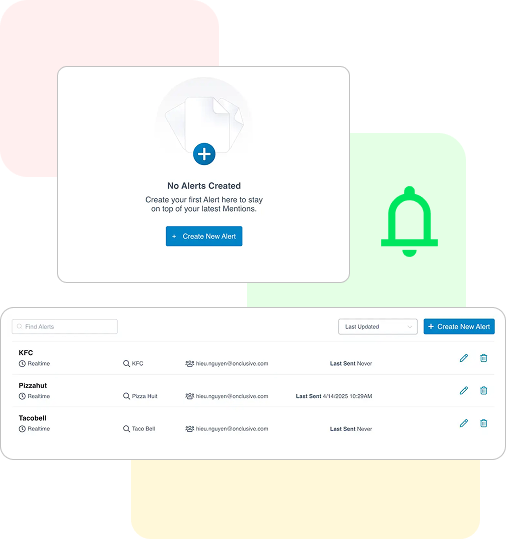
Receive Real-Time Alerts
-
Save keyword searches and set up real-time alerts
-
Choose to be notified by email for any keywords hits or set up a daily digest of all of your coverage
-
Customize alerts to contain specific media types or markets

Access the Critical Mention API
Integrate with the Critical Mention API to access content, metadata and historical archives.
Critical Mention partners across industries like finance, tech, media, data journalism, PR and government leverage the API to spot trends in big data.
Get Started
Diverse Industries. Common Challenges.
Agencies
PR, Communications and marketing agencies use the Critical Mention platform to help clients track earned media coverage in real-time, analyze campaigns and grow their brands.
Regardless of the size of your agency, Critical Mention has the tools you need to track TV, radio, online news, licensed print, Twitter, Facebook, Instagram and YouTube mentions.
Leverage customizable reporting to share crucial KPIs with clients and sentiment analysis to help your clients understand the context of coverage.
Monitor your clients' progress from a single intuitive interface and deliver results.
Brands
Some of the most trusted, popular brands in the world use the Critical Mention platform to monitor earned media coverage.
Whether your organization is focused on broadcast, online or social media news, the Critical Mention platform ensures you will never miss a mention.
Real-time results ensure you can capitalize on positive earned media and address any potential problems before they grow.
You can also count on 24/7/365 support and a dedicated account manager to ensure you get the most out of the solution.
Public Sector
Federal agencies, local governments, political offices, campaigns and other public sector organizations all leverage Critical Mention to track the news that matters to them.
Whether you are looking to track coverage during a campaign or news related to your organization, the platform provides the speed, breadth of coverage and analytics you need.
For PR and communications professionals in the public sector, tracking media in real-time is indispensable.
Many of these organizations choose Critical Mention because they appreciate the reliability and uptime offered by a cloud-based platform.
Education
Colleges, universities, school districts and other educational institutions use Critical Mention to monitor news about their students, teachers, research and programs.
The platform is used by some of the most prestigious universities in the world and by local school districts alike.
With Critical Mention, communications professionals in the education space can monitor and analyze coverage across TV, radio, online news and print sources.
With student populations so heavily engaged on social media, Critical Mention also provides communications professionals the ability to track content on Facebook, Twitter, YouTube and Instagram in real-time.
Healthcare
Hospitals, medical practices, biotech firms and other healthcare providers rely on Critical Mention to track the health-related media coverage they care about.
Whether you are looking to track coverage of your hospital, a new therapeutic or any other topic, Critical Mention provides real-time media monitoring.
Communications professionals in the healthcare space are under constant pressure to both track important news and keep the public informed about healthcare.
Critical Mention counts many of the largest healthcare organizations in the world among its clients because the platform provides fast access to sources across industry trade publications, TV, radio, online news and social media with Critical Mention.
Technology
Software companies, IT services organizations, technology leaders and fast-growing startups leverage the Critical Mention platform for insight into their earned media and the broader technology landscape.
Real-time alerts, customizable dashboards and easy-to-share reports make the platform ideal for technology firms.
Whether your firm is looking to monitor Instagram, Twitter, Facebook, YouTube, online news, TV or radio sources, Critical Mention provides best-in-industry speed and uptime reliability.
Technology companies can also integrate with the Critical Mention API to enhance their own offerings or for additional insights provided by big data.
Financial Services
Maintaining public confidence is critical for any organization that handles investments or manage capital.
That is why banks, investment funds, accounting firms and other financial institutions leverage the Critical Mention platform to keep up with industry news and brand mentions.
Financial services organizations rely on Critical Mention's real-time monitoring capability to capture and analyze mention across TV, radio, online news and print sources, Twitter, Instagram, Facebook and YouTube.
Investors of all kinds also leverage the Critical Mention API to spot global trends in media metadata.
Marketing
Brand strategists, digital marketers and marketing agencies use Critical Mention to measure the impact of media coverage on their overall brand awareness marketing efforts.
Marketers can utilize the platform to stay on top of backlinks, social media presence and brand reputation.
Sentiment analysis helps marketers evaluate their brand health in the marketplace while share of voice metrics are an important tool for competitive analysis.
Customized reports and dashboards make for easy analysis and our Google Analytics integration helps marketers understand the impact of earned media on web traffic and conversions.
Top Businesses Trust Critical Mention